Because shales ordinarily have insufficient permeability to allow significant fluid flow to a well bore, most shales are not commercial sources of natural gas.

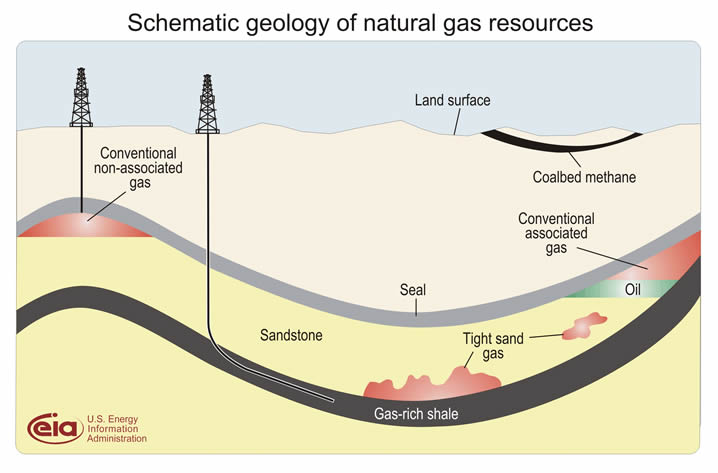
- Shale gas is one of a number of unconventional sources of natural gas; other unconventional sources of natural gas include coalbed methane, tight sandstones, and methane hydrates.
- Shale gas areas are often known as resource plays[17] (as opposed to exploration plays). The geological risk of not finding gas is low in resource plays, but the potential profits per successful well are usually also lower.[citation needed]
- Shale has low matrix permeability, so gas production in commercial quantities requires fractures to provide permeability. Shale gas has been produced for years from shales with natural fractures; the shale gas boom in recent years has been due to modern technology in hydraulic fracturing (fracking) to create extensive artificial fractures around well bores.[citation needed]


No comments:
Post a Comment